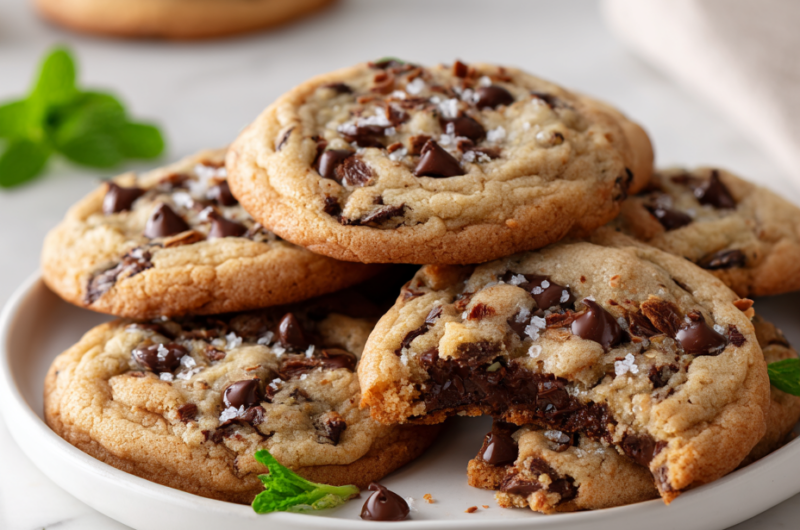
When I first started experimenting with chocolate chip cookies, I realized that the type of chocolate I used could totally change the vibe of the cookie. Switching from bittersweet to white chocolate, for instance, shifts the flavor and texture in a way that surprises even the most loyal cookie fans. It’s funny how such a tiny ingredient tweak can make a cookie feel totally new.
Baking cookies isn’t just about following a recipe; it’s about understanding what each chocolate brings to the table. Dark chocolates add a deep, rich bitterness that balances the sweetness, while milk chocolates lend a creamy, mellow sweetness. White chocolate, on the other hand, offers a buttery, almost caramel-like note that melts into the dough.
This little exploration into chocolate varieties isn’t just a pastry experiment—it’s a way to personalize a classic. Every batch becomes a new story, a little adventure in flavor, and a reminder that even the simplest recipes have room for your own twist.
Focusing on how the type of chocolate affects the cookie’s texture and flavor, from bittersweet to white chocolate, and how each variation brings a different personality to the classic cookie.
The story behind this recipe
- This recipe came about during a chaotic Sunday afternoon, when I was desperately craving cookies but had no store-bought chips left. I remembered a batch I made years ago, using whatever chocolate bits I had on hand, and how that imperfect, melty mess felt oddly comforting. It’s funny how the simplest things, like a handful of chocolate chunks, can turn a bad day around.
- I’ve always loved how the process of baking cookies can be a little messy—spills, smudges, accidental extra pinch of salt. It’s a reminder that imperfection is part of the charm. This recipe is my go-to because it’s forgiving, flexible, and always feels like a cozy act of rebellion against the perfect, pristine treats you see in magazines.
- heading
- Story behind this recipe
Key Ingredients Breakdown
- Unsalted butter: I prefer using softened butter for even mixing; it gives the cookies a tender crumb. If you only have salted, reduce the added salt slightly.
- Granulated sugar: The sweetness and crunch come from regular white sugar. For a chewier cookie, swap half for brown sugar, which adds moisture and depth.
- Eggs: Fresh eggs help with structure and moisture. If you’re out, an extra tablespoon of applesauce can work but might make the cookies softer.
- All-purpose flour: I’ve found that weighing the flour gives the best results. Too much makes the cookies dense; too little, crumbly. Sift if you see lumps.
- Chocolate chips: Use a mix of chunks and chips for texture. I love dark chocolate with a hint of sea salt—melts and shimmers as it bakes, adding bite and burst of flavor.
- Baking soda: It’s what gives those gentle rise and spread. If your cookies turn out flat, check your freshness—baking soda loses potency over time.
- Vanilla extract: The magic aroma that ties everything together. Use real vanilla for that warm, caramel undertone—skip imitation, unless you like a sharper note.
Spotlight on key ingredients
Chocolate chips:
- I love using semi-sweet because they strike a perfect balance of bitter and sweet, melting into gooey pools as they bake. If you prefer a more intense cocoa flavor, go for dark chocolate chunks.
- They hold their shape when baked, creating delightful pockets of melty richness. For a different experience, try white chocolate for a buttery sweetness that shimmers in each bite.
Butter:
- I prefer unsalted, softened to room temp so it creams smoothly with sugar, giving the cookies a tender, moist crumb. If only salted butter is available, cut back on the added salt.
- It’s what makes the cookies rich and flavorful. When melted, it spreads faster, resulting in a thinner, crispier cookie—good for a different texture if that’s what you want.
Notes for ingredient swaps
- Dairy-Free: Swap butter for coconut oil or vegan margarine. Expect a slightly richer, coconut scent and a softer crumb.
- Sugar Alternatives: Use honey or maple syrup instead of granulated sugar. Cookies may spread more and have a subtle caramel flavor.
- Egg-Free: Replace eggs with flaxseed meal mixed with water or applesauce. Cookies will be slightly denser and less chewy.
- Flour Variations: Almond or oat flour can replace all-purpose flour. These create a nuttier flavor and a more tender, crumbly cookie.
- Chocolate Options: White chocolate, milk chocolate, or even caramels—each brings a different sweetness and melt-in-your-mouth texture.
- Salt: Add a pinch of smoked sea salt for a smoky twist or skip to keep the sweetness pure.
- Add-ins: Nuts, dried fruit, or coconut flakes can replace or augment chocolate for more texture and flavor complexity.
Equipment & Tools
- Oven: To bake the cookies evenly at a consistent temperature.
- Parchment paper: Prevents sticking and makes cleanup easier.
- Mixing bowls: To combine ingredients separately and then mix together.
- Electric mixer or spatula: To cream butter and sugar, and mix ingredients thoroughly.
- Cookie scoop or two spoons: To portion dough evenly for uniform cookies.
- Baking sheet: To hold the cookies while baking.
- Cooling rack: To allow air to circulate and cool cookies evenly.
Step-by-step guide to cookies
- Preheat your oven to 180°C (350°F). Line a baking sheet with parchment paper. Have your mixer, spatula, and cookie scoop ready.
- In a large bowl, cream together 115g (1/2 cup) softened unsalted butter and 100g (1/2 cup) granulated sugar for about 2 minutes until light and fluffy. Smell that sweet, buttery aroma.
- Add 1 large egg and 1 tsp vanilla extract. Mix until just combined, about 30 seconds. The mixture should be smooth and glossy.
- In a separate bowl, whisk together 150g (1 1/4 cups) all-purpose flour, 1/2 tsp baking soda, and a pinch of salt. Sift to avoid lumps.
- Gradually add dry ingredients to the wet, mixing on low speed or with a spatula. Stop when just incorporated. Avoid overmixing to keep the cookies tender.
- Fold in 150g (1 cup) chocolate chips or chunks. Use a sturdy spatula or wooden spoon. The dough will be thick and slightly sticky.
- Use a cookie scoop or two spoons to portion dough onto the prepared baking sheet, spacing about 5 cm (2 inches) apart. Slightly flatten each ball for even spreading.
- Bake for 10-12 minutes. The edges should be golden brown, and the centers still soft. The smell will turn caramel-sweet, inviting you to pull them out just in time.
- Remove from oven and let cookies rest on the sheet for 5 minutes. They will firm up slightly as they cool but remain soft inside. Transfer to a wire rack to cool completely.
- Finish with a pinch of flaky sea salt if desired. Serve warm or at room temperature. These cookies taste best within a day, still warm and gooey.
Let the cookies cool on the baking sheet for 5 minutes, then transfer to a wire rack. Finish with a sprinkle of sea salt if desired. Serve warm or at room temperature, ideally within a day for maximum softness and flavor.
How to Know It’s Done
- Edges are golden brown, centers look soft but set.
- Chocolate chips are melted and glossy, not burnt or raw.
- Cookies feel firm but yield slightly when gently pressed.
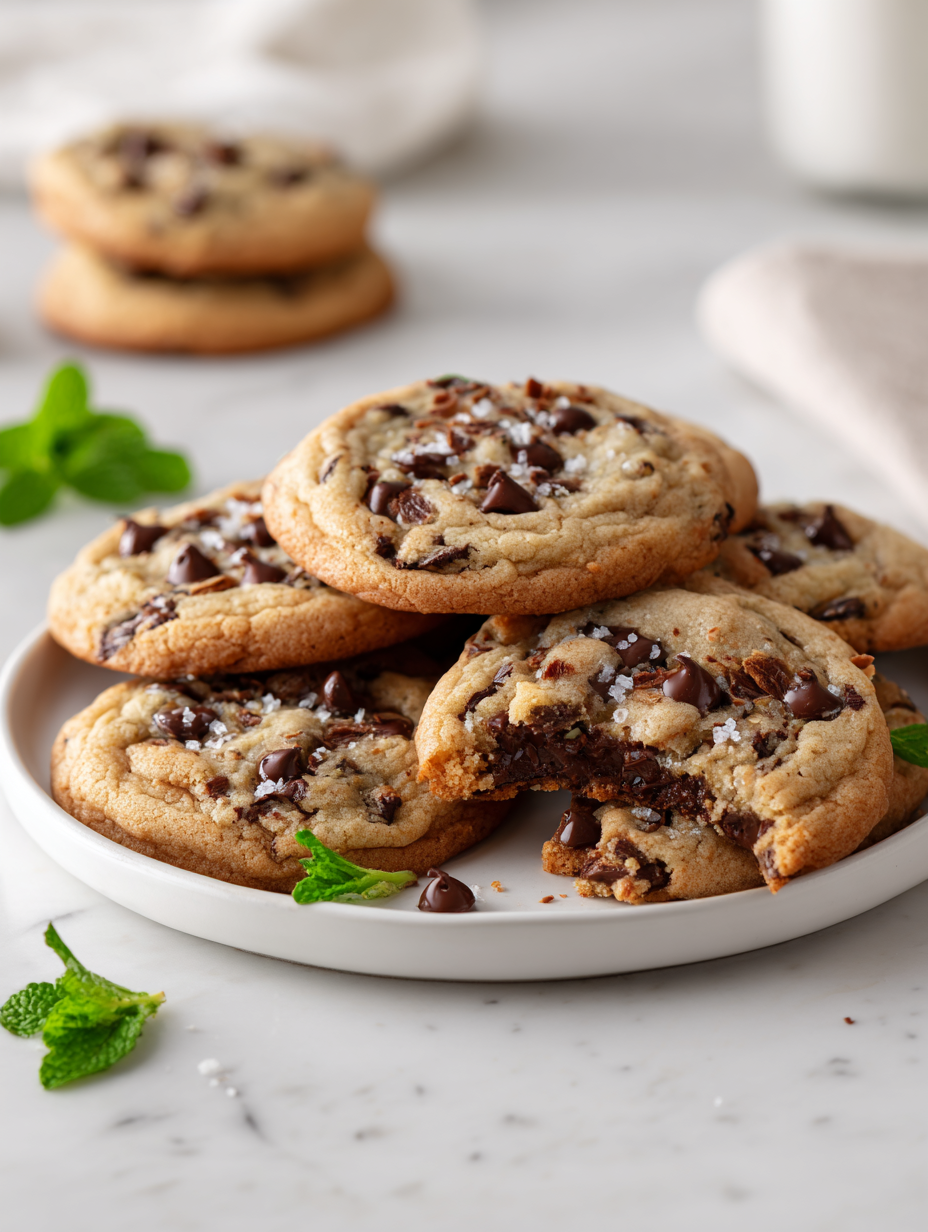
Chocolate Chip Cookies with a Twist
Ingredients
Equipment
Method
- Preheat your oven to 180°C (350°F) and line a baking sheet with parchment paper.
- Using a mixer or spatula, cream together the softened butter and granulated sugar in a large bowl until the mixture is light and fluffy, about 2 minutes. You’ll notice it turns a pale, creamy color and sounds slightly squeaky as you beat it.
- Add the egg and vanilla extract to the creamed mixture, mixing until just combined. The mixture will loosen and become glossy, with a fragrant aroma filling your kitchen.
- In a separate bowl, whisk together the flour, baking soda, and salt. Sifting helps break up lumps and ensures an even blend.
- Gradually add the dry ingredients to the wet mixture, mixing on low speed or folding gently with a spatula until just combined. The dough should come together into a soft, slightly sticky ball.
- Fold in the chocolate chips or chunks evenly throughout the dough, ensuring each bite will be full of melty goodness.
- Using a cookie scoop or two spoons, portion the dough onto the prepared baking sheet, spacing each about 5 cm (2 inches) apart. Slightly flatten each mound for even spreading.
- Bake in the preheated oven for 10-12 minutes, until the edges turn a beautiful golden brown and the centers still look soft and slightly puffed. The aroma of baking chocolate and caramel will fill your kitchen.
- Remove the baking sheet from the oven and let the cookies rest on it for about 5 minutes; this helps them set. Then, transfer them to a cooling rack to cool completely or enjoy warm while the chocolate is still gooey.
- Sprinkle a pinch of flaky sea salt on top if desired, to enhance the chocolate flavor. Serve the cookies warm or at room temperature for maximum softness and flavor.
Notes
Pro tips for perfect cookies
- Bolded mini-head: Chill the dough for at least 30 minutes to prevent excessive spread during baking.
- Bolded mini-head: Use room temperature butter for a creamy, even mixture that results in tender cookies.
- Bolded mini-head: For extra chewiness, swap half the granulated sugar with brown sugar for added moisture.
- Bolded mini-head: Slightly underbake the cookies; they will firm up as they cool, keeping that soft center.
- Bolded mini-head: Incorporate a pinch of flaky sea salt on top before baking for a sweet-salty contrast.
- Bolded mini-head: Use a cookie scoop to ensure uniform size, so all cookies bake evenly and at the same rate.
Common mistakes and how to fix them
- FORGOT to preheat the oven → Always preheat to ensure even baking.
- DUMPED in too much flour → Sift and measure accurately for perfect texture.
- OVER-TORCHED the cookies → Remove when edges are golden, centers slightly soft.
- MISSED chilling the dough → Chill for 30 minutes for better spread and flavor.
Quick fixes and pantry swaps
- If cookies spread too much, chill the dough for 30 minutes before baking.
- When chips aren’t melting, increase oven temperature slightly or bake for an extra minute.
- Splash some sea salt on top before baking to enhance chocolate flavor and add contrast.
- Patch cracked cookies by pressing the edges gently back together as soon as they come out of the oven.
- Shield burnt bottoms by placing a baking sheet on a lower rack if edges brown too quickly.
Prep, store, and reheat tips
- Prepare the dough up to 24 hours in advance, wrap tightly, and chill in the fridge for a deeper flavor and easier handling.
- Store baked cookies in an airtight container at room temperature for up to 3 days; for longer, freeze for up to 3 months. Keep layers separated with parchment paper to prevent sticking.
- Reheat cookies briefly in a 150°C (300°F) oven for 3-5 minutes until warm and gooey again, with a faint shimmer of melty chocolate reappearing.
- Freezing dough balls before baking preserves freshness for up to a month; bake directly from frozen, adding 1-2 minutes to the baking time.
- For best flavor and texture, consume within the first 2 days after baking; after that, cookies may soften or lose their crisp edges.
Top questions about chocolate chip cookies
1. How do I know when the cookies are done?
Look for cookies that are golden around the edges and slightly soft in the center. They should feel firm but give a little when gently pressed.
2. Can I use cold butter or eggs?
Use room temperature butter and eggs for even mixing. Cold ingredients can lead to uneven spreading and texture issues.
3. Should I chill the dough?
Chill the dough for at least 30 minutes to prevent spreading and to develop richer flavor. Longer chilling can improve taste and texture.
4. Can I use different types of chocolate?
Stir in different chocolates like dark, milk, or white to customize flavor. Each melts differently and adds unique personality to your cookies.
5. My cookies spread too flat, what can I do?
If the cookies spread too much, refrigerate the dough for 15-30 minutes before baking. This helps control spread and improves texture.
6. How long should I bake the cookies?
Baking at 350°F (180°C) for 10-12 minutes usually works well. Keep an eye on edges turning golden for perfect doneness.
7. What type of chocolate is best?
Use semi-sweet or dark chocolate for a balanced bitter-sweet flavor. White chocolate offers a creamy, buttery note that melts into the dough.
8. How should I store leftover cookies?
Store baked cookies in an airtight container at room temperature for up to 3 days. Freeze for longer storage, up to 3 months.
9. Can I reheat cookies?
Reheat cookies in a 300°F (150°C) oven for 3-5 minutes until warm and melty. They’ll regain their softness and aroma.
10. How can I make the flavor pop?
For extra flavor, sprinkle a little flaky sea salt on top before baking. It enhances the chocolate and adds a satisfying crunch.
Baking these cookies isn’t just about satisfying a sweet tooth; it’s a little act of rebellion against the overly polished treats you find elsewhere. The smell of melting chocolate and toasted butter fills the kitchen, making everything feel a bit more manageable, even on the busiest days.
They’re a reminder that sometimes, the simplest ingredients—when treated with care—can turn into something genuinely comforting. No matter where you end up eating them, these cookies carry a little piece of the messy, joyful process that made them.

Hi, I’m Noah Bennett, the creator behind Breathing In Flavors. For me, cooking begins with a breath. Before the first bite, before the plating, before the garnish, there is that quiet moment when steam rises and you inhale. That is where flavor truly begins. Breathing In Flavors is my space to slow down, appreciate ingredients, and cook with awareness. I am so glad you’re here.
 The creator behind Breathing In Flavors.
For me, cooking begins with a breath. Before the first bite, before the plating, before the garnish, there is that quiet moment when steam rises and you inhale. That is where flavor truly begins.
Breathing In Flavors is my space to slow down, appreciate ingredients, and cook with awareness. I am so glad you’re here.
The creator behind Breathing In Flavors.
For me, cooking begins with a breath. Before the first bite, before the plating, before the garnish, there is that quiet moment when steam rises and you inhale. That is where flavor truly begins.
Breathing In Flavors is my space to slow down, appreciate ingredients, and cook with awareness. I am so glad you’re here.