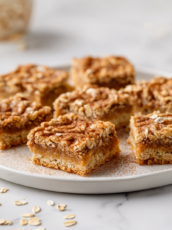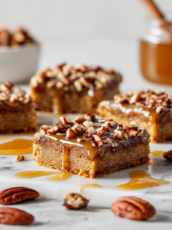
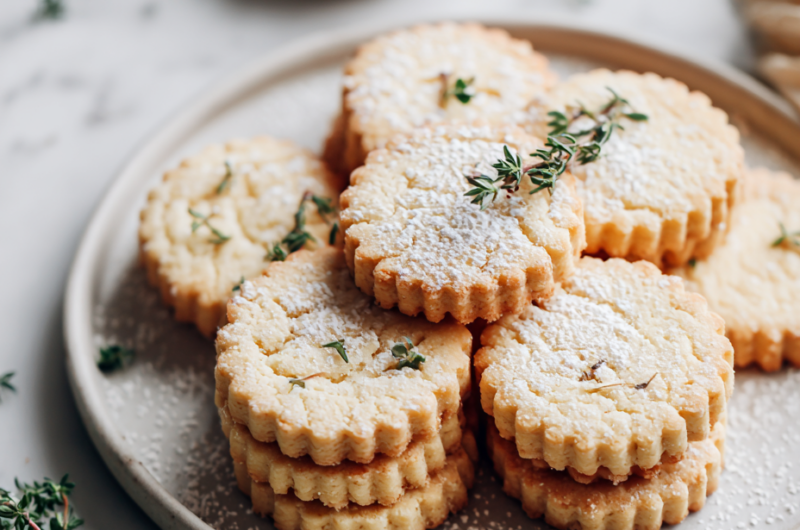
Making shortbread cookies is one of those slow, tactile acts that forces you to slow down for a bit. There’s something meditative about mixing butter and sugar, feeling the dough come together under your hands, and rolling it out with care. It’s a ritual that reconnects you with simple, honest pleasures, especially in a world that’s constantly rushing.
This recipe isn’t about perfection or fancy techniques. It’s about embracing the quiet joy of baking something familiar and buttery, a little crumbly, with just enough sweetness. It’s a practice in mindfulness—an act of mindful baking that turns a humble cookie into a moment of pause in your day.
Focusing on how the simple act of making traditional shortbread can serve as a meditative ritual, turning baking into a mindful practice that reconnects you with slow, tactile pleasures amidst a busy world.
Why I Love This Shortbread
- Making shortbread has always felt like a quiet act of rebellion against the rush. I remember the first time I inherited my grandmother’s battered rolling pin, its wood smooth from years of use. That simple tool made me slow down, feel the dough under my hands, and appreciate the tiny, deliberate motions that turn butter and sugar into something comforting.
- Every batch I make is a small ritual—measuring, mixing, and finally, that satisfying crackle as the dough hits the oven. It’s not just about the cookies, but about reclaiming a moment of calm. A reminder that sometimes, the simplest things can be the most grounding.
- heading
- story_type
Key Ingredients and Tips
- Unsalted butter: I love the rich, creamy flavor it adds, and softening it helps the dough come together smoothly. If you prefer less richness, try a touch of margarine for a slightly different texture.
- Powdered sugar: Its fine texture melts right into the butter, giving the cookies a tender crumb. If you only have granulated sugar, blitz it in the blender for a minute to mimic the powdery feel.
- All-purpose flour: I stick with plain flour for that classic crumbly bite. Swap in pastry flour for a slightly softer texture, but avoid bread flour if you want them tender and delicate.
- Salt: Just a pinch highlights the buttery sweetness. If you’re using salted butter, cut back a bit on the added salt to avoid over-seasoning.
- Vanilla extract: A splash brightens everything and makes it feel like a special treat. You can substitute almond extract for a nutty twist, but use a little less since it’s more potent.
- Optional: Cornstarch or rice flour: I sometimes add a teaspoon for extra tenderness. Skip if you want a sturdier cookie, but it really melts in your mouth with this tweak.
- Chilling time: Not an ingredient, but crucial. Resting the dough in the fridge for at least 30 minutes helps prevent spreading and deepens flavor. Don’t skip it!
Spotlight on key ingredients
Butter & Sugar:
- Unsalted butter: I love how it melts smoothly, creating a tender crumb with a rich, creamy aroma. For a dairy-free version, coconut oil works, but it adds a hint of coconut that changes the flavor profile.
- Powdered sugar: Its fine, silky texture dissolves seamlessly into the butter, giving the cookies a melt-in-your-mouth tenderness. If you only have granulated sugar, blitz it in the blender first to mimic the powdery feel, avoiding grainy bites.
Notes for ingredient swaps
- Dairy-Free: Swap butter for coconut oil or vegan butter. Expect a slightly different richness and a hint of coconut aroma.
- Gluten-Free: Use a blend of almond flour and rice flour. Cookies may be more delicate and crumbly, but just as buttery.
- Sweetener Variations: Replace powdered sugar with honey or maple syrup. Adjust the flour slightly to compensate for moisture.
- Flavor Boost: Add a touch of lemon zest or orange extract instead of vanilla. Brightens the cookies with citrusy notes.
- Salt Alternatives: Use sea salt flakes for a subtle crunch and a more pronounced salty contrast, especially if skipping the vanilla.
- Texture Tweaks: Incorporate chopped nuts or dried fruit into the dough for added crunch and chewiness. Keep the chunks small to prevent breakage.
- Color & Browning: Brush the unbaked cookies with an egg wash or milk to enhance golden color and slight shine.
Equipment & Tools
- Mixing bowl: Combine and cream ingredients smoothly.
- Electric mixer or whisk: Cream butter and sugar evenly.
- Rolling pin: Flatten dough to even thickness.
- Cookie cutter: Cut out uniform shapes.
- Baking sheet: Hold cookies during baking.
- Parchment paper: Prevent sticking and make cleanup easier.
- Wire rack: Cool cookies evenly after baking.
Step-by-step guide to shortbread
- Gather all ingredients and tools first; ensure butter is softened at room temp for easier mixing.
- Preheat your oven to 160°C (320°F). Line a baking sheet with parchment paper to prevent sticking.
- In a mixing bowl, cream together 1 cup (226g) unsalted butter and 1/2 cup (60g) powdered sugar until smooth and fluffy, about 2-3 minutes.
- Stir in 1 teaspoon vanilla extract for that warm, aromatic note; mix well to combine.
- Gradually sift in 2 cups (250g) all-purpose flour and a pinch of salt. Mix gently until the dough just comes together—don’t overmix, or the cookies might be tough.
- Form the dough into a flat disc, wrap tightly in plastic, and chill in the fridge for at least 30 minutes. This relaxes the gluten and prevents spreading.
- Once chilled, place the dough on a lightly floured surface. Roll it out to about 0.5 cm (1/4 inch) thickness. If it cracks, let it sit at room temp for 5 minutes and try again.
- Use a cookie cutter (about 2 inches diameter) to cut out shapes, then transfer to your prepared baking sheet, spacing about 2 cm apart.
- Bake in the preheated oven for 12-15 minutes, until the edges are just turning golden. The smell of buttery sweetness should fill your kitchen.
- Remove from oven and let cookies rest on the sheet for 5 minutes. They will firm up as they cool. Transfer to a wire rack for complete cooling.
- Finish by dusting with a little extra powdered sugar if desired, or leave them plain for that pure shortbread experience.
Wrap cooled cookies in an airtight container or store in a tin. They keep well for up to a week. For extra crispness, re-bake at 150°C (300°F) for 5 minutes before serving, watching for that gentle crackle and buttery aroma.
How to Know It’s Done
- Edges are lightly golden, not browned.
- Cookies feel firm but tender when gently pressed.
- Cracks appear on the surface without spreading excessively.
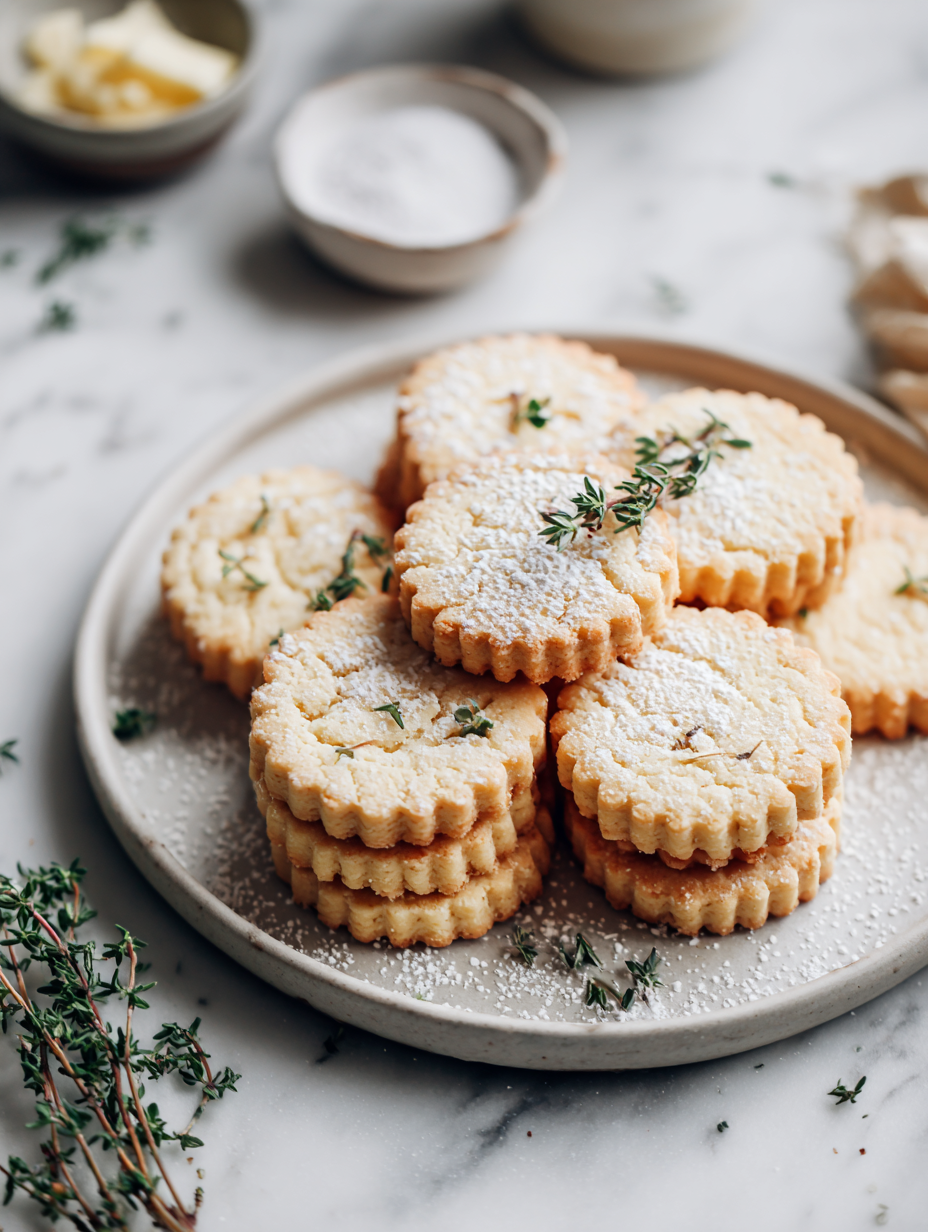
Classic Shortbread Cookies
Ingredients
Equipment
Method
- In a mixing bowl, cream together the softened butter and powdered sugar using an electric mixer or whisk until the mixture is smooth, light, and fluffy, about 2-3 minutes. This creates a delicate, fragrant base for your cookies.
- Stir in the vanilla extract and mix well, ensuring it’s fully incorporated and the mixture feels velvety to the touch.
- Gradually sift in the all-purpose flour along with a pinch of salt, mixing gently on low speed or folding with a spatula until the dough just begins to come together. Be careful not to overmix to keep the cookies tender.
- Gather the dough into a flat disc, wrap it tightly in plastic wrap, and refrigerate for at least 30 minutes. This helps the dough relax, making it easier to roll out and preventing spreading during baking.
- Preheat your oven to 160°C (320°F) and line a baking sheet with parchment paper to prevent sticking. Remove the dough from the fridge and place it on a lightly floured surface.
- Using a rolling pin, gently roll out the dough to about 0.5 cm (1/4 inch) thickness, rotating and flouring the surface as needed to prevent sticking. The dough should feel firm but pliable.
- Cut out cookies with a cookie cutter, pressing firmly to maintain clean edges, and carefully transfer them to the prepared baking sheet, spacing about 2 cm apart for expansion.
- Bake the cookies in the preheated oven for 12-15 minutes, until the edges are lightly golden and fragrant. Keep a close eye to avoid overbaking, which can make them dry.
- Once baked, remove the cookies from the oven and let them rest on the baking sheet for about 5 minutes to firm up. Then, transfer them to a wire rack to cool completely and develop their tender, crumbly texture.
- Enjoy your homemade shortbread cookies plain or lightly dusted with powdered sugar for a classic finish. Store in an airtight container at room temperature for up to a week.
Tips for perfect shortbread
- Chill the dough thoroughly to prevent spreading during baking, ensuring crisp edges.
- Use a light touch when mixing; overworking the dough makes cookies dense and tough.
- Watch the oven closely; shortbread edges turn golden quickly, about 12 minutes at 160°C (320°F).
- For even baking, rotate the baking sheet halfway through the bake time.
- Handle dough minimally; overhandling warms the butter and alters texture.
- Use a sharp cookie cutter; pressing firmly helps maintain clean edges without deforming shapes.
- Let baked cookies rest for 5 minutes on the sheet before transferring to cool; they firm up perfectly.
Common mistakes and how to fix them
- FORGOT to chill the dough → result in spread-out cookies, fix by refrigerating longer.
- DUMPED in too much flour → tough cookies, sift in flour gradually to avoid excess.
- OVER-TORCHED the edges → bitter taste, watch for golden edges at 12 minutes.
- MISSED the resting step → cookies crumble, let dough rest for at least 30 minutes.
Quick Fixes & Pantry Swaps
- If dough cracks when rolling → Warm it slightly or chill for 10 more minutes.
- When cookies spread too much → Chill the shaped dough longer before baking.
- Splash a few drops of cold water on dough if too crumbly.
- Patch burnt edges by trimming and re-baking at lower temp for 2 minutes.
- Shield cookies with foil if edges brown too quickly.
Prep, store, and reheat tips
- Dough can be prepared ahead: Wrap tightly and refrigerate up to 3 days. The chilled dough is easier to roll and cuts cleaner, with a richer flavor developing over time.
- Store baked cookies in an airtight container at room temperature for up to a week. They stay crisp and buttery; adding a slice of bread helps keep them fresh longer.
- Freeze unbaked dough for up to a month: Slice and bake straight from frozen, adding an extra 2-3 minutes to baking time for a warm, melt-in-your-mouth treat.
- Reheat cookies briefly in a warm oven (around 150°C/300°F) for 5 minutes until they crackle softly and smell buttery again. Avoid microwaving, which can make them tough.
Top questions about shortbread cookies
1. Should I use cold or softened butter?
Use cold butter for a tender crumb and a flaky texture. Warm butter makes the dough greasy and harder to handle.
2. Can I overmix the dough?
Yes, overmixing can toughen the cookies. Mix just until the ingredients come together to keep them tender and crumbly.
3. Is chilling necessary?
Chill the dough in the fridge for at least 30 minutes. It firms up, making it easier to roll and shaping cleaner edges.
4. What’s the ideal baking temperature and time?
Bake at 160°C (320°F) for 12-15 minutes. Look for lightly golden edges—overbaking will make them dry and crumbly.
5. How should I store shortbread cookies?
Store baked cookies in an airtight container at room temperature for up to a week. For longer storage, freeze for up to a month.
6. Can I change the flavoring?
Yes, you can substitute almond or lemon extract for vanilla. They add a different aromatic twist but keep the overall flavor simple.
7. Should I add extra salt?
Adding a pinch of salt enhances sweetness and balances the buttery flavor. Use less if your butter is salted.
8. How do I get clean cookie edges?
Use a cookie cutter with a sharp edge for clean shapes. Press firmly but gently to avoid deforming the dough.
9. What if the dough cracks?
If the dough cracks when rolling, let it sit at room temperature for 5 minutes or lightly flour the surface.
10. How do I reheat shortbread?
Reheat baked cookies in a warm oven (about 150°C/300°F) for 5 minutes to restore their buttery aroma and crispness.
Baking these simple shortbread cookies is a quiet act of mindfulness, a way to slow down and reconnect with the tactile pleasures of baking. The smell of melted butter and vanilla filling the kitchen is a gentle reminder to savor the small, honest moments in life.
In a world that often rushes by, taking the time to measure, shape, and bake these cookies offers a grounding ritual. They’re more than just treats; they’re a pause, a moment of calm that can leave a lingering buttery aroma long after the last bite.

Hi, I’m Noah Bennett, the creator behind Breathing In Flavors. For me, cooking begins with a breath. Before the first bite, before the plating, before the garnish, there is that quiet moment when steam rises and you inhale. That is where flavor truly begins. Breathing In Flavors is my space to slow down, appreciate ingredients, and cook with awareness. I am so glad you’re here.
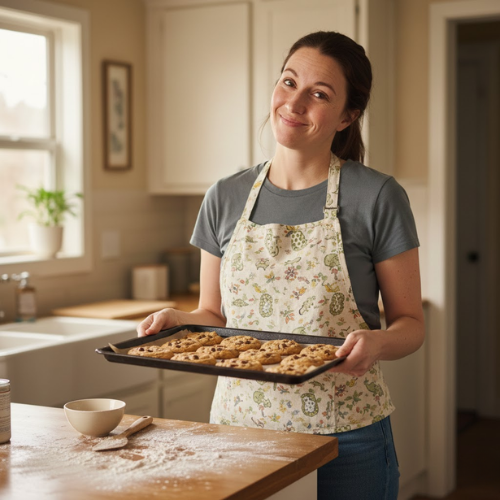 The creator behind Breathing In Flavors.
For me, cooking begins with a breath. Before the first bite, before the plating, before the garnish, there is that quiet moment when steam rises and you inhale. That is where flavor truly begins.
Breathing In Flavors is my space to slow down, appreciate ingredients, and cook with awareness. I am so glad you’re here.
The creator behind Breathing In Flavors.
For me, cooking begins with a breath. Before the first bite, before the plating, before the garnish, there is that quiet moment when steam rises and you inhale. That is where flavor truly begins.
Breathing In Flavors is my space to slow down, appreciate ingredients, and cook with awareness. I am so glad you’re here.